
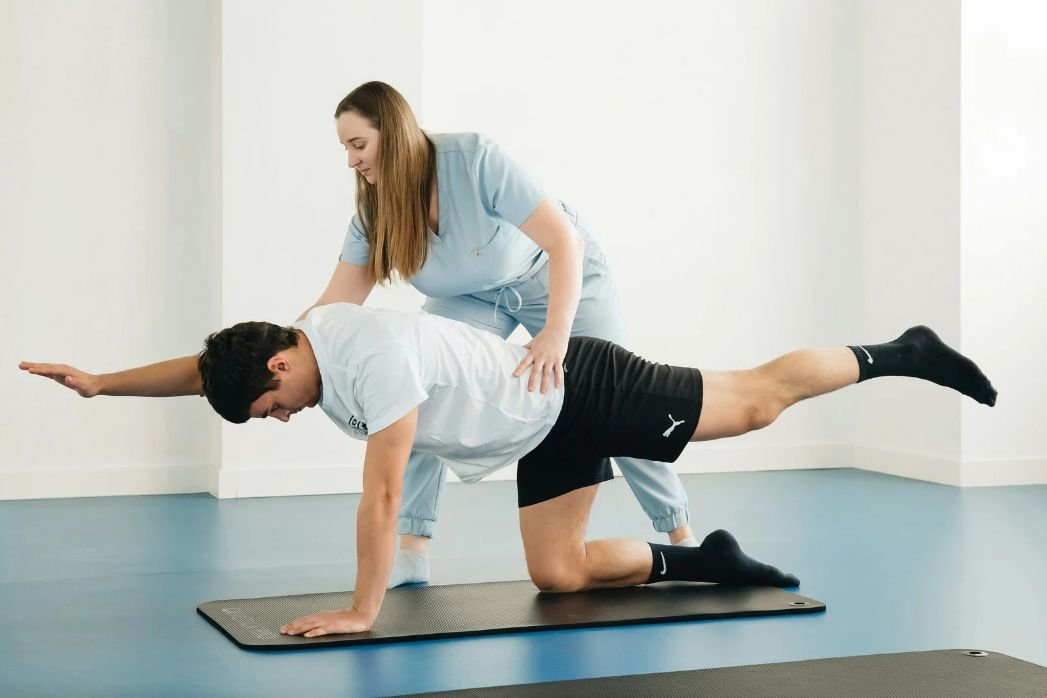
Recovering from injuries that occurred at work is not just sitting around until the pain disappears. If you have injured your back, shoulders, or knee, there is going to be an entire process that needs to occur before you regain strength and mobility.
Even though work injury physiotherapy is beneficial in the context of symptom management and mobility, you might as well choose exercise rehabilitation in order to cope with the physical problems associated with your job. A professional exercise physiologist will help you regain your strength and mobility by developing a unique program for you.
What Is Exercise Physiology in Workplace Injury Rehabilitation?
Structured exercise is employed by exercise physiology to help reconstruct muscle strength, flexibility, endurance and function following a trauma injury. The treatment is designed based on your condition, capability and objectives by an accredited exercise physiologist.
The treatment can consist of:
- Building up the strength of damaged muscles and improving joint flexibility.
- Practising certain movements like flexing, extending, standing up, and lifting objects.
- Increasing the body’s ability to tolerate walking, standing, or repeated actions.
- Learning better movement management strategies
- Adjusting exercises based on improvement in your functional capacity
A warehouse worker suffering from a lower-back injury could start with easy exercises for movement improvement and end up doing exercises similar to the work he does. The aim here is to build your functional capacity.
Can Workers’ Compensation Pay for Exercise Physiology in NSW?
Workers in NSW who are considered eligible can make use of money for exercise physiology because of a successful Workers Compensation claim; nevertheless, there are certain conditions that must be met for this treatment.
Before booking an appointment, you need to ensure that:
- You have had your claim accepted.
- You have a doctor’s referral letter.
- You have insurer approval for treatment.
- You have a practitioner who satisfies SIRA criteria.
- You know about the session limits, cost and documentation needed.
Insurers evaluate whether or not the treatment is reasonable and necessary in terms of its relation to the injury, its clinical justification and its value for money.
How Does WorkCover Exercise Physiology Support Recovery?
Structured exercise is important for helping injured workers regain their capacity for work.
WorkCover Exercise Physiology involves the following:
- Progressive loading: Strength gain with improved tolerance.
- Work-simulated conditioning: Doing job-specific activities.
- Movement control: Improvement in movement control.
- Activity tolerance: Progressively gaining tolerance to challenging activities.
- Home exercise: Assistance in achieving improvements between sessions.
For instance, an injured hospitality worker may progressively build up their tolerance while standing as well as do movements that are required of them during the course of their work shift. All exercises should be symptom-led, clinically directed, and medically advised.
What Does Return to Work Rehabilitation Involve?
The Return to work rehabilitation process involves the safe resumption of duties by injured workers in terms of the gradual recovery of their capacity to perform certain tasks. This could involve the assessment of job demands, establishment of practical goals, consideration of the option of part-time work or reduced duties, as well as monitoring the progress while maintaining constant communication with the treating doctor, employer, insurance company, and rehabilitation service provider.
Your Next Steps: How to Arrange Exercise Physiology Through Workers’ Compensation
A proper procedure could prevent any delay:
- Visit your doctor: Determine if exercise physiology is appropriate.
- Contact your health insurance company: Verify if you qualify and how to do so.
- Select an accredited facility: Select one that has workplace rehabilitation experience.
- Give the necessary documentation: Give them your referral.
- Go for your assessment: Determine your goals and develop a program.
For Workers Compensation Exercise Physiology Mosman, Strength Clinic offers personalised workplace rehabilitation in Mosman and the Sydney area suburbs.
Preparing for Your First Exercise Physiology Appointment
Your initial assessment is where you are at the start and helps to determine your program.
First-Appointment Checklist
Bring or have ready:
- Medical information: Referral, medical reports, and treatment records.
- Claim information: Claim number and insurance company contact information, if necessary.
- Work needs: Your normal job tasks.
- Symptoms: Things that aggravate or improve your symptoms.
- Goals: Goals including returning to work, walking without pain or lifting.
- Clothing: Bring appropriate clothing.
- Questions: Exercises, reassessment, exercise at home and communication with your treatment team.
Conclusion
Recovery from a workplace injury means having an action plan that deals with your symptoms as well as the physical challenges that accompany the activities of daily living. With exercise physiology, one can regain strength and mobility, and ultimately make a return to the workplace.
An understanding of the NSW funding requirements, getting the go-ahead and selecting the appropriate therapist can make the process easier. Effective communication between you, your GP, the rehabilitation team and the insurance company will help maintain the goals of recovery.
At Strength Clinic, personalised rehabilitation emphasises restoration of function and physical capability.
FAQs
Q1. Do I require a doctor’s referral for exercise physiology for workers’ compensation in NSW?
Yes, generally you require a referral from your nominated treating doctor and approval from the insurer.
Q2. What is the duration of rehabilitation?
The duration of recovery depends on your injury, fitness, occupation, and your progress. The goal setting and monitoring will be done by the practitioner.
Q3. Can I work while undergoing treatment?
Depending on your injury and health status, it may be possible. You might be able to do modified work with reduced work hours.
Q4. How is exercise physiology different from physiotherapy?
Physiotherapy generally deals with pain, movement and recovery, while exercise physiology involves progressive exercise and conditioning.
Q5. What happens if the insurer has not yet approved further sessions?
You can contact your insurer and your practitioner’s team to check whether more information is required. You can confirm the approval of funding before booking another session.
Need Support With Workplace Injury Rehabilitation?
Strength Clinic delivers personalised rehabilitation for work-related injuries in Mosman and the suburbs of Sydney. Its ESSA-accredited exercise physiologists deliver specialised programs for conditioning and recovery.
Contact Strength Clinic
Phone: +61 434842378