
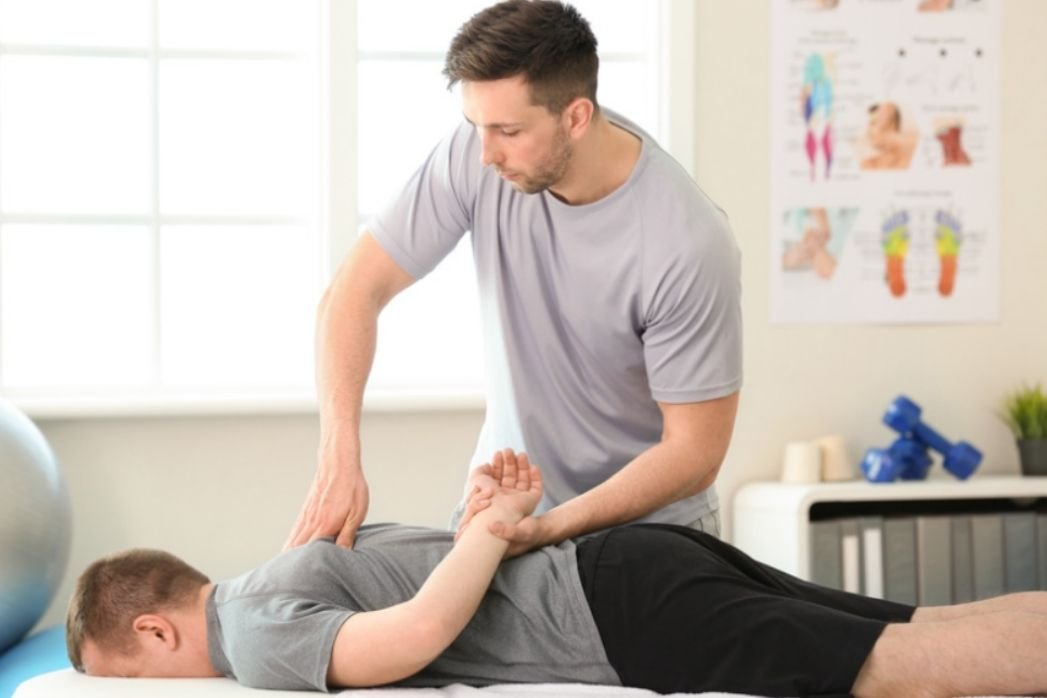
The loss of strength, confidence or mobility will make daily activities such as standing, stair climbing, outdoor walking and participation in recreational activities harder to achieve. Exercise will assist people to gain functional ability, confidence and independence in movement. The best NDIS exercise programs are those which take into consideration the goals, needs and lifestyle of each individual. At Strength Rehabilitation, professional therapists in Sydney offer effective and goal-oriented exercise rehabilitation.
How Exercise Supports Strength and Mobility
The two factors are related in making movements easier and in enabling participation in significant activities.
- Gain functional strength: Strength exercise enables one to stand, walk, lift and transfer.
- Increase joint mobility: Mobility exercise may enable one to become less stiff and more mobile.
- Build endurance: Slowly increasing activity may increase cardio-respiratory fitness and tolerance to walking.
- Gain confidence: Exercise under supervision may make the exercise easier and safer.
- Gain independence: Greater strength, balance and endurance may aid in daily activities.
An optimal program links physical activities to goals rather than to results in the gym.
Improving Balance and Functional Movement
Balance requires the use of strength, coordination, speed and body control while moving.
- Practice in increments: Start from easier balances and move toward greater difficulty.
- Use functional movements: Incorporate steps, reaches, turns, and changes of direction.
- Develop important muscles: Target your lower limbs, core and hips for stability.
- Account for exhaustion: Consider your pace and intensity in accordance with available energy.
- Find your limits: Perform balance tasks that stretch your abilities but not so much as to frustrate you.
Practice and progression will serve you better than performing complex balance tasks prematurely.
What Does NDIS Exercise Physiology Involve?
NDIS exercise physiology is the use of exercise that is specifically designed according to the needs of each individual. The first step for the Accredited Exercise Physiologist will be an assessment of the individual before designing a unique exercise program for him.
This program could consist of a discussion about the following aspects:
- Strength, mobility, balance and exercise tolerance
- Injury, surgery or movement restrictions
- Fatigue and recovery requirements
- Equipment and exercise environment
- Personal goals and interests
- Progress measurement techniques
Such programs could consist of resistance training, mobility, balance, gait, or other exercise rehabilitation and are adapted as fitness increases.
Turning Exercise Into Everyday Progress
Here is a real-life application of the significance of individualisation. A client who finds it difficult to rise from a low chair, feeling unstable when outside, may start doing sit-to-stand exercises with support, resistance exercises on the lower body, and step exercises.
With increasing strength and stability, support can be decreased, and the exercises can become more advanced. This is based on one key aspect of exercise physiology: progress means increasing ability through independence.
Choosing the Right Exercise Approach
A comprehensive assessment makes sure that the program is safe, relevant, and appropriate for the participant’s needs. This is particularly significant in cases where physiology for WorkCover rehabilitation is needed.
The method to search for is the one that:
- Has specific functional goals.
- Involves realistic progression.
- Adjusts to pain, fatigue and changes.
- Explains the purpose of each exercise.
- Updates the exercise programme for the individual.
- Supports sustainability.
The Strength Rehabilitation program has helped over 4,000 people in Sydney, including those with ACL injuries, shoulder pain and surgery.
Common Mistakes to Avoid
Exercise can provide many benefits, yet exercise done in an improper manner can hinder success.
- Overexerting oneself early on: Exercise must be gradual to aid in recovery.
- Exercising with no consideration for the individual: Exercise must fit the person’s capabilities.
- Disregarding fatigue: It is necessary to rest when the ability to exercise is limited.
- Only working out isolated muscle groups: Functional tasks involve more coordination.
An appropriate strategy will result in lasting improvement and active participation.
Conclusion
A customised exercise plan may be used by clients to achieve their aim of strengthening their muscles, enhancing their balance, increasing their mobility and making them more comfortable performing tasks on their own. NDIS exercise programs are created to take into account the specific capabilities and requirements of each client and will be conducted by experts who will make sure that each exercise is appropriate. Regular reviews will be conducted to ensure that the exercise plan is still applicable, considering changing circumstances.
FAQs
Q1. Can exercise help with mobility through an NDIS?
Exercise can aid mobility by improving strength, flexibility, balance, coordination, and endurance, based on each individual’s circumstances.
Q2. Is exercise safe for individuals with reduced mobility?
It can be. Exercise programs can usually be tailored according to one’s capability, assistance available, tiredness and functional goals.
Q3. How frequently should exercise be done?
There isn’t a frequency that will suit all. The needs for exercise vary based on the individual’s goals, abilities, recovery, and exercise program devised by the therapist.
Q4. Does exercise contribute to recovery from an operation?
Exercise can be a part of a rehabilitation program after an operation if prescribed and progressed appropriately.
Q5. How is the improvement evaluated?
The improvement might be observed in the form of increased strength, walking capacity, balance, movement quality, self-confidence or performing certain daily tasks.
Start Your Movement Journey Today
At Strength Rehabilitation, you will be able to get exercise physiology services that will improve your strength, balance, and mobility. You can contact us on +61 434842378 for more information